Lost-wax bronze casting: how a Sri Chinmoy statue is made
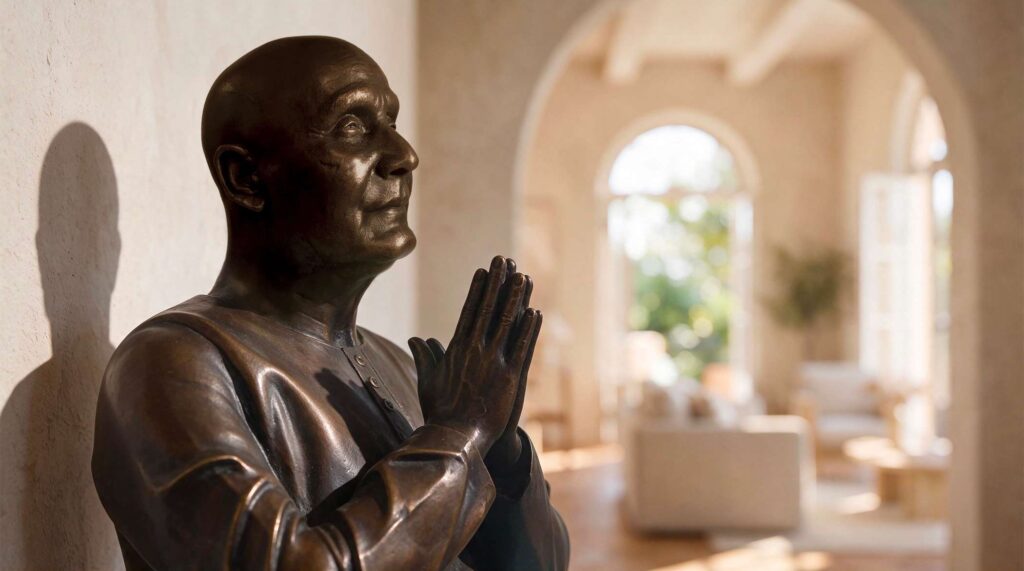
Lost-wax casting is a technique more than 6,000 years old: a wax copy of a sculpture is encased in ceramic, melted out in a kiln and replaced by molten bronze. Each of our statues passes through ten phases and six crafts before it is ready.
A bronze statue is never the work of one person. On its way from the first photograph to the final patina, it passes through the hands of sculptors, mould-makers, wax artisans, foundry masters, goldsmiths and patina artisans: six crafts, each one a lifetime of knowledge.
A life-size figure can take hundreds of hours of hands-on work. Our statues take two to four months from order to completion, and every one of those hours is spent with attention, patience and love.
6,000+ years
the age of the lost-wax technique
6
crafts united in one statue
1,000+ °C
the heat of molten bronze
2–4 months
from order to finished statue
The choice of material
Why we cast Sri Chinmoy in bronze
Before choosing bronze, we cast the same face in plastic, resin, concrete, gypsum and cold-cast bronze, and placed them side by side. Each had its own beauty, but only a noble material such as bronze carried the presence and the deep, massive energy we were looking for.
We then tested several foundries. Some told us that the detail we asked for was impossible in metal. With one partner, through great effort and steadfast work, we achieved what others had called impossible: every line of the face, carried into bronze. We have worked together ever since.
Bronze also endures. Cared for, it keeps its form and its patina for centuries, indoors and out.
The ten phases
The ten phases of lost-wax bronze casting
01
1. Study
Thousands of photographs and hours of film are gathered and studied, feature by feature: the line of the brow, the fold of a sleeve, the way the hands rest together. Before anything is shaped, it is understood.
02
2. Drawing
Everything begins with the heart, then the hands. Pencil studies of the face and the posture fix the proportions and the feeling of the work.
03
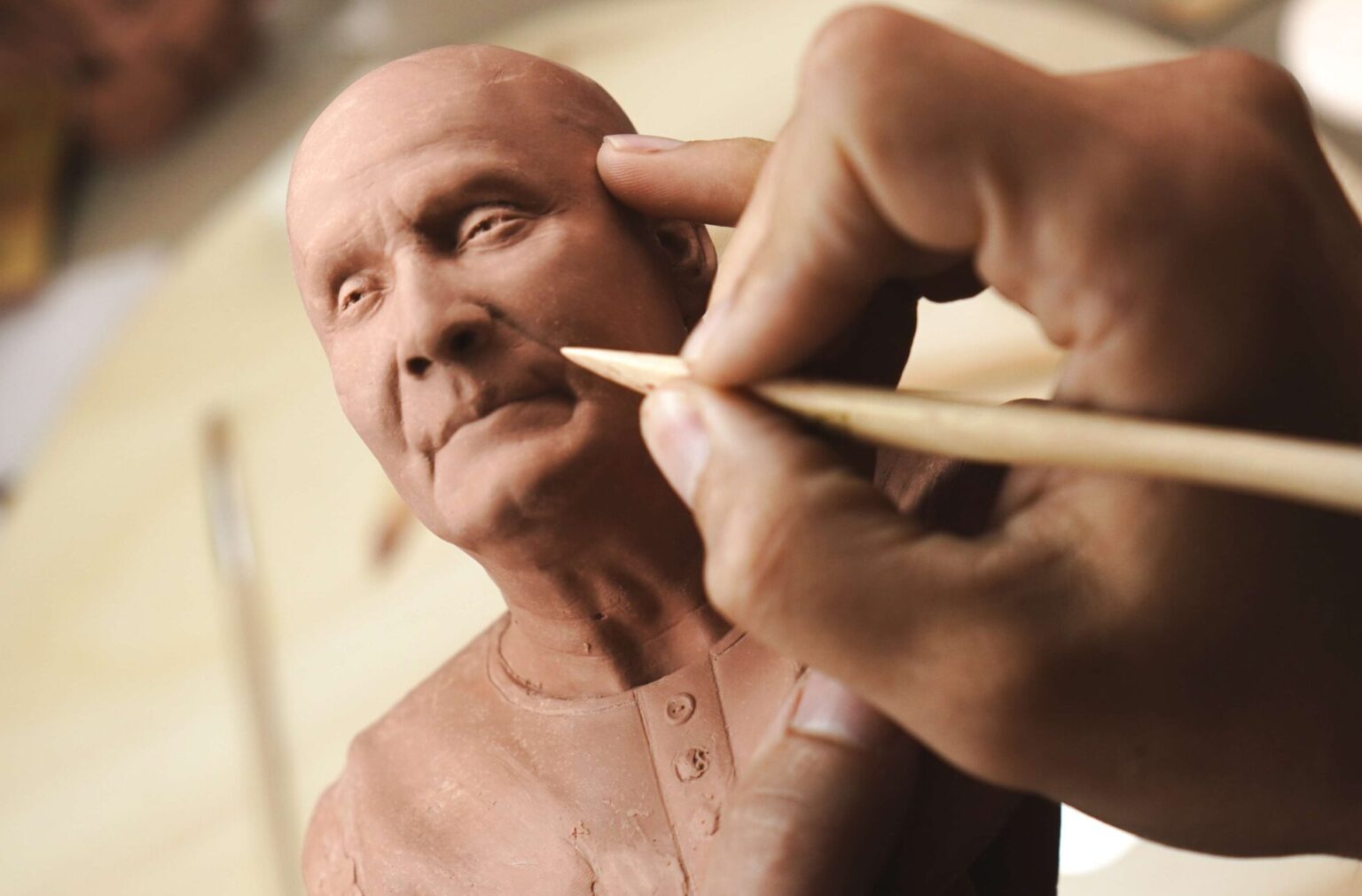
3. Sculpting
The same hand guides new chisels and classic ones. In digital sculpting, every proportion is shaped against the photographs; in clay, the form takes on weight and touch. Weeks, sometimes months, of patient work.
04
4. The model
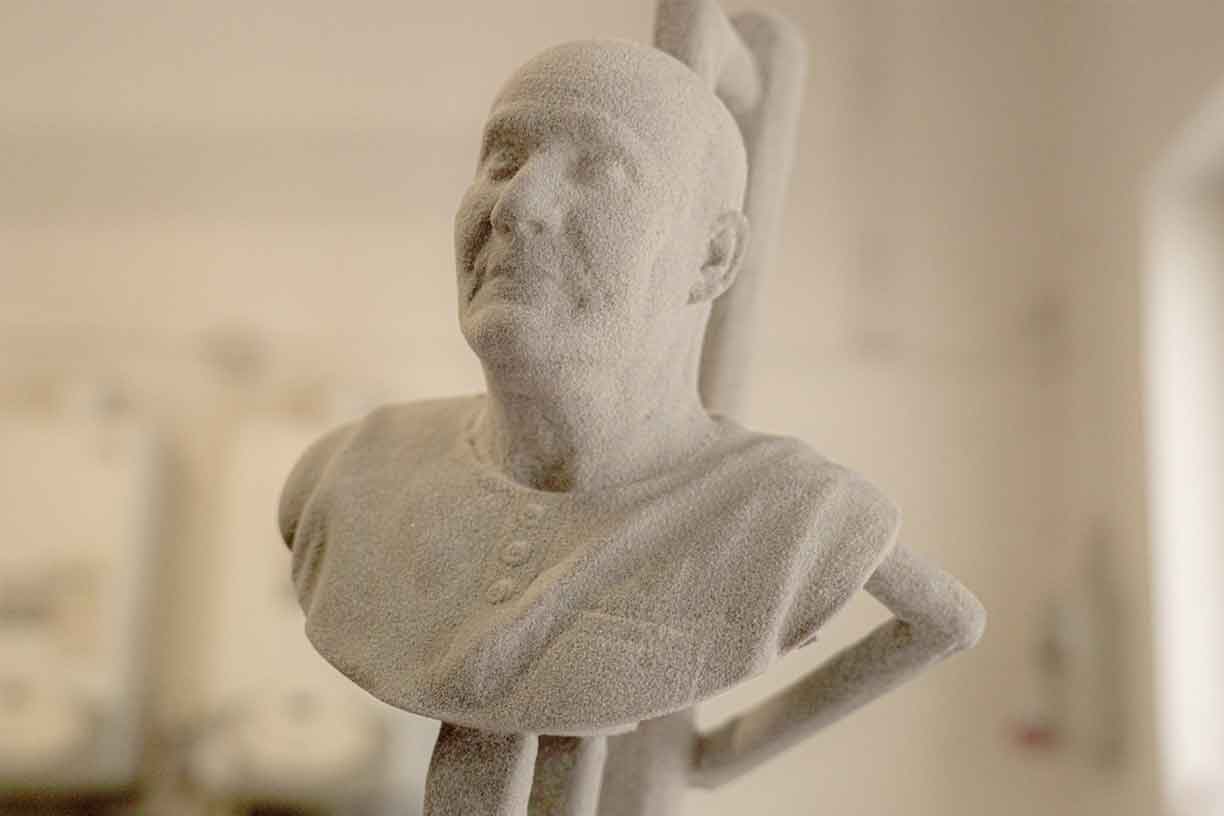
The model is printed with precision, then completed by hand: built up and refined with clay wherever the form calls for touch.
05
5. The mould
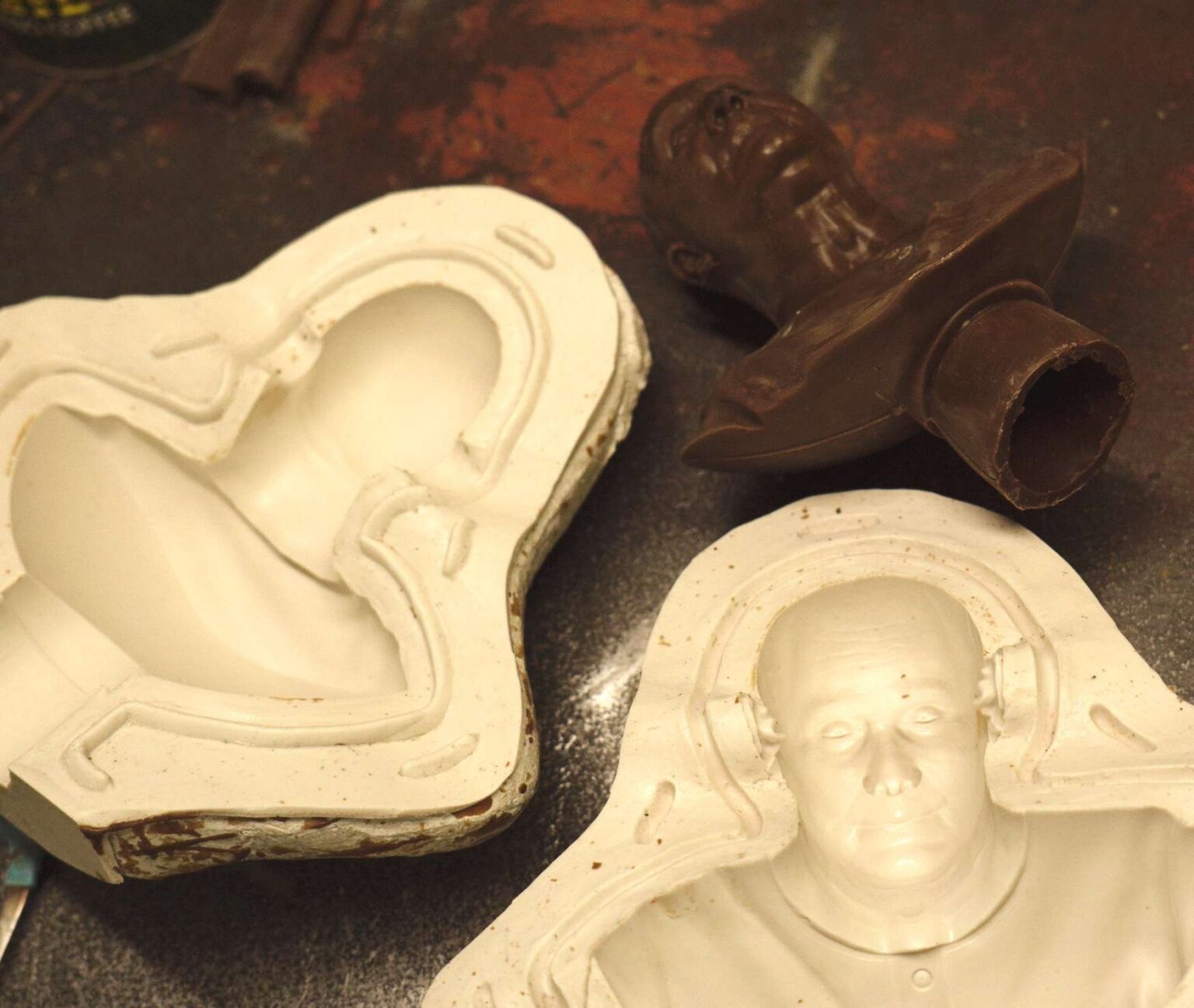
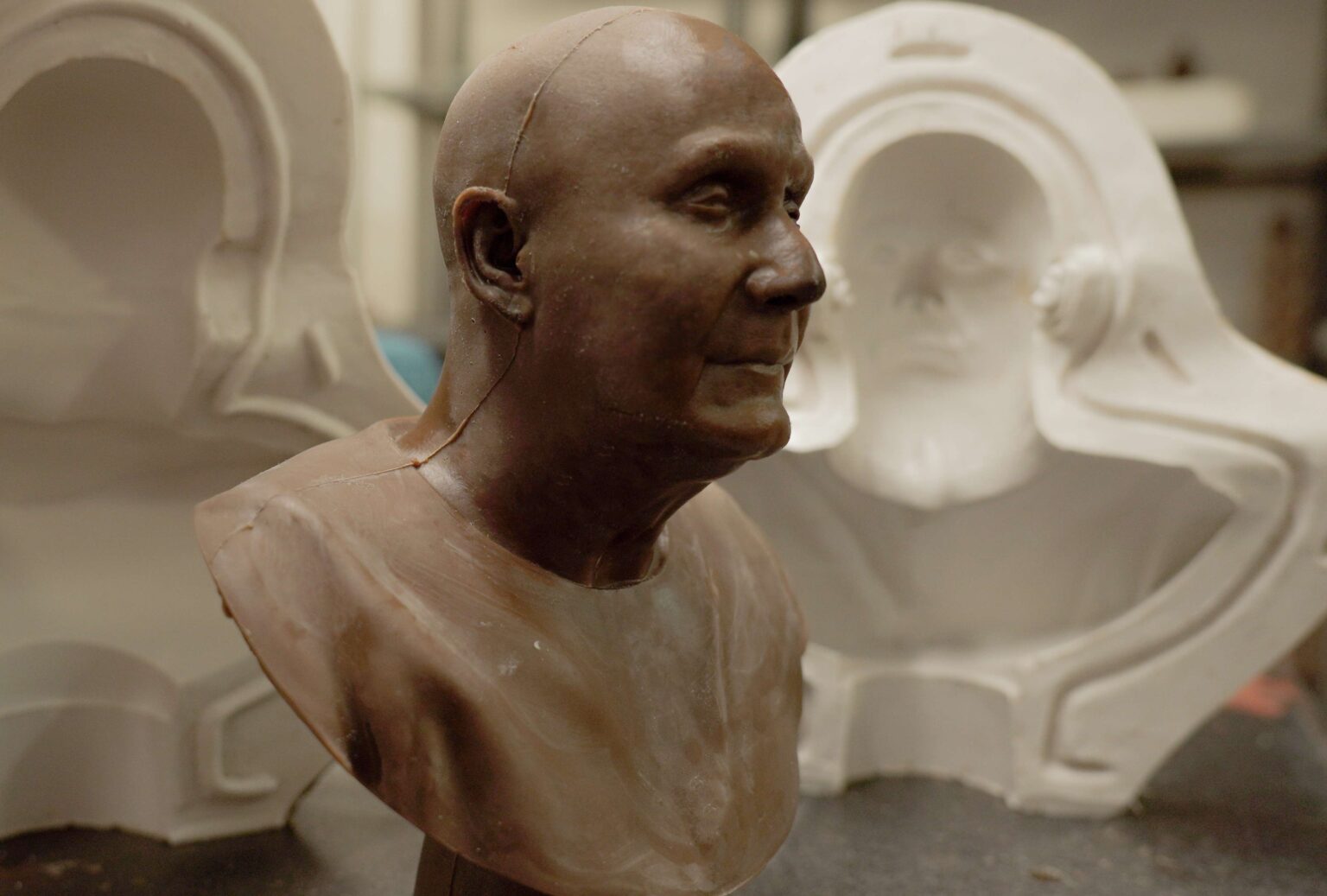
A flexible silicone mould, around six millimetres thick, captures every detail of the model. A rigid plaster jacket, the “mother mould”, holds its shape.
06
6. The wax
Molten wax is brushed and poured into the mould in layers, until a hollow wax copy about six millimetres thick is formed. Each wax is retouched by hand, and a network of wax channels, the sprues, is attached so the bronze can later flow.
07
7. The ceramic shell
The wax is dipped into a fine ceramic slurry and dusted with sand, again and again: five or six layers, each left to dry for hours, until a shell about twelve millimetres thick surrounds it.
08
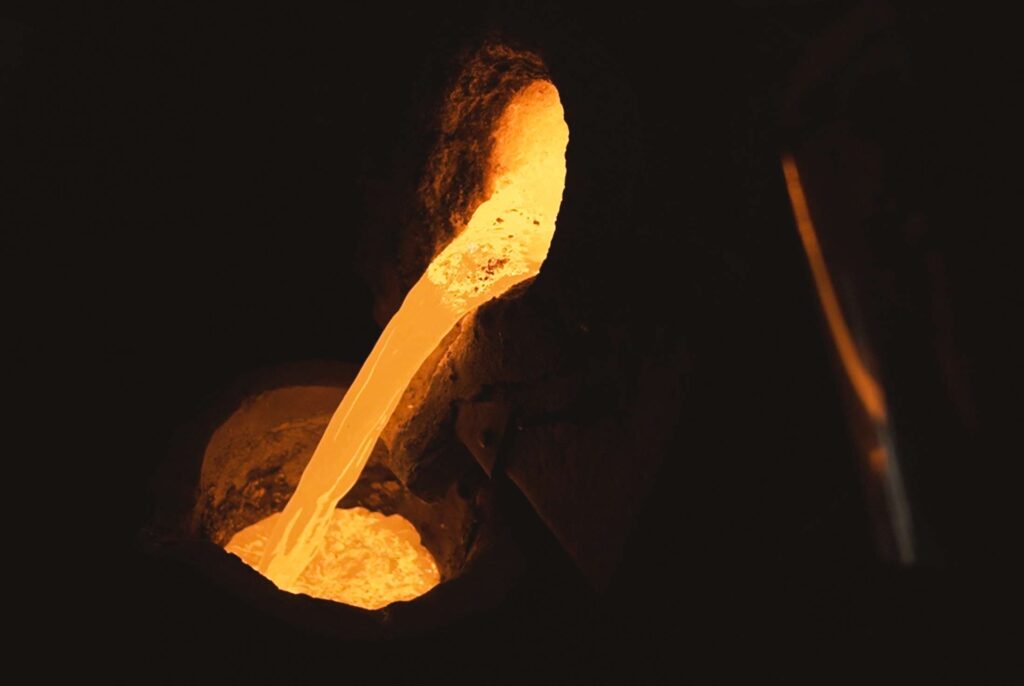
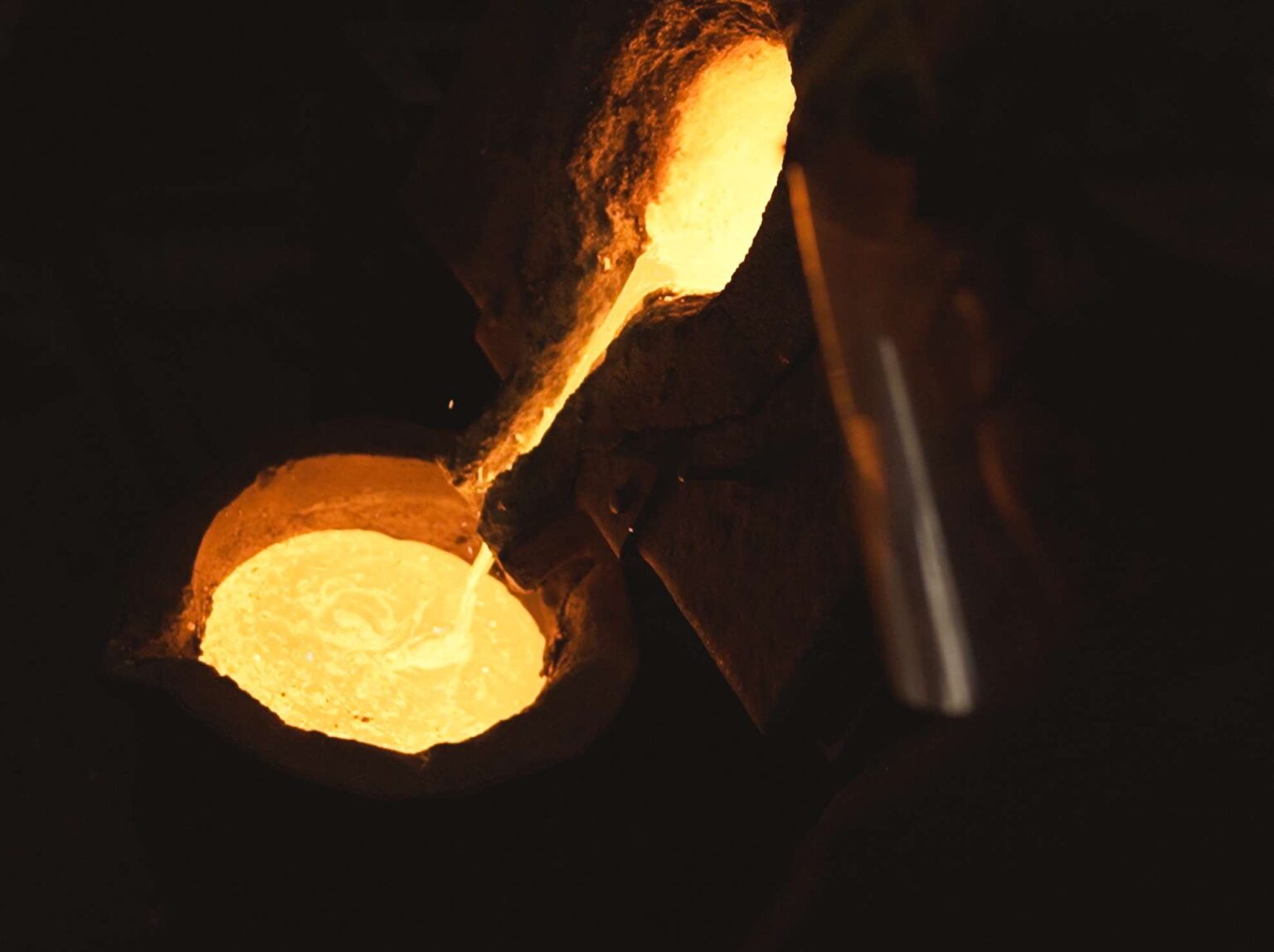
8. Fire and bronze
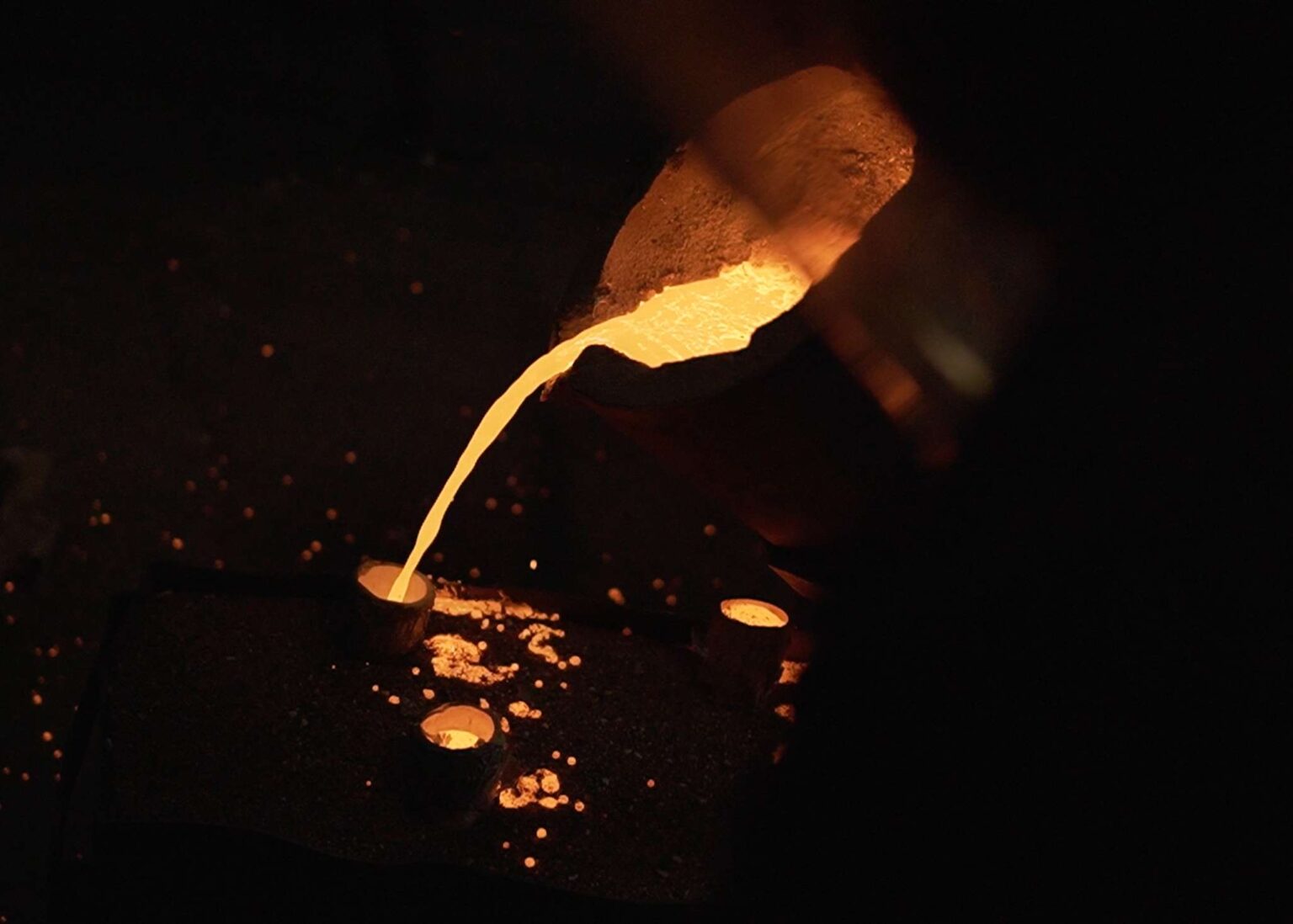
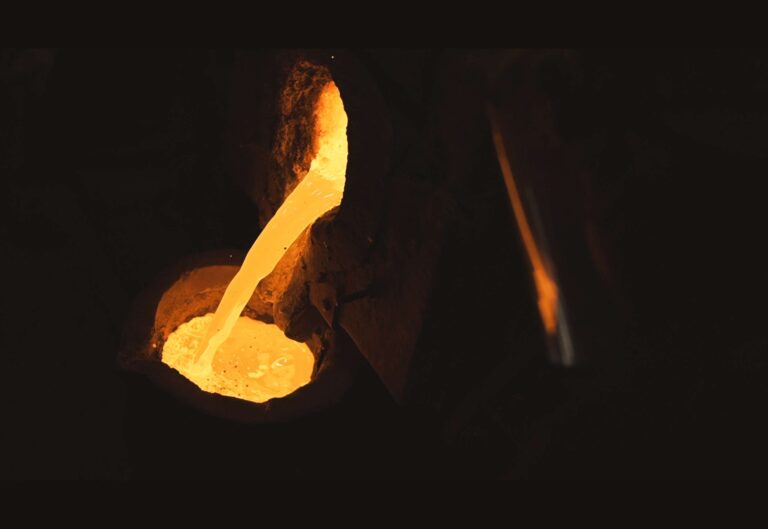
In the kiln, at over 650 °C, the wax melts and runs out: this is why the process is called “lost wax”. Into the hot, empty shell, bronze is poured at over 1,000 °C. Cooling takes hours, sometimes days.
09
9. Chasing
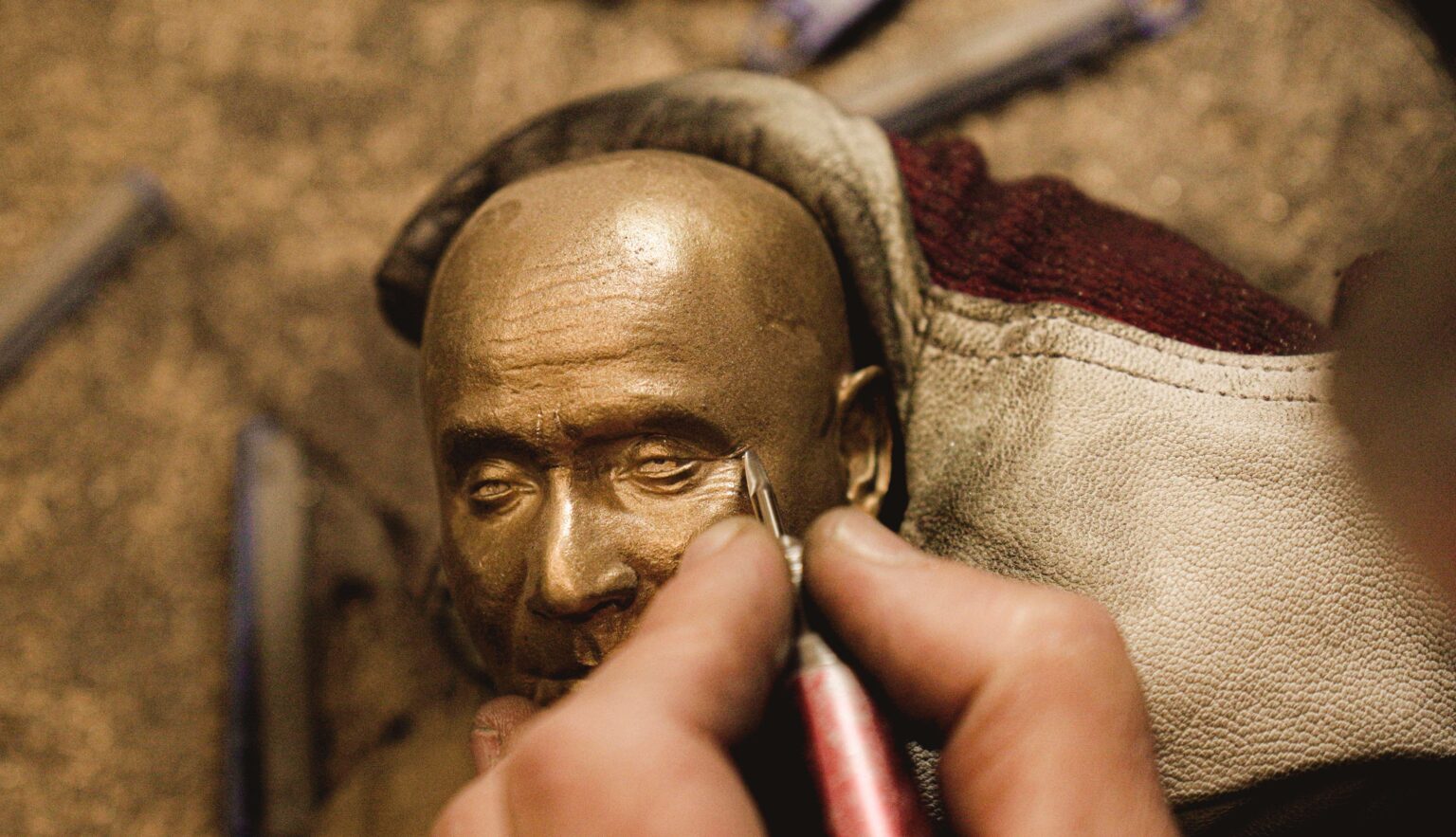
The shell is broken away and the surface cleaned. Sections are welded together, and goldsmiths chase each detail by hand, restoring every line of the face and every fold of the cloth. Polishing brings out the light.
10
10. The patina
The bronze is warmed with a torch, and patina solutions are brushed on, coat by coat: warm browns, or the deep turquoise of old bronze. A final layer of wax seals and protects the surface for generations.
The collection, in bronze
Sri Chinmoy Statues
Beyond the bronze
The statue was finished. Our work was not.
When the last layer of patina had settled, something still remained to be done. Self-transcendence was at the heart of everything Sri Chinmoy taught, and we wanted our gratitude to reach further than the bronze – into the paper that vouches for it, the case that carries it, and every small object that travels with it. None of this changes the statue. We hope it shows the love it was made with.
The case
A home for the statue
Our 15 cm and 27 cm bronzes arrive in a case made with a workshop that builds presentation boxes for Swiss luxury watchmakers. Its shell is clad in walnut veneer. Inside, a foam bed is cut by blade and stitched by hand to hold the statue’s form, lined in vegan suede, and a walnut tray keeps its accompanying pieces in order.
Shell
Walnut veneer
Lining
Vegan suede
Bed
EVA foam
Tray
Walnut
Dust bag
Vegan microfibre suede
In the making
Hands, once again
The patience that shaped the bronze went into every seam and every edge.
Every bronze, whatever its size, is accompanied by a signed certificate of authenticity, printed on security paper of the kind used for valuable documents. It is our word, made tangible – and made so that it cannot be copied.
UV marksHidden features that appear only under ultraviolet light
UV fibresFibres in the paper that glow only under ultraviolet light
WatermarkFormed in the paper itself, visible against the light
Micro-marksFine markings invisible to the naked eye
MicrotextLines of text too small to reproduce
Holographic sealCarries microtext, and cannot be removed without leaving a trace
Each certificate carries the name of the statue and its number.
What travels with it
Small things, made with the same care
With our smaller bronzes come a few quiet companions:
Certificate holderHand-stitched vegan leather, to keep the certificate safe for generations.
Metal warranty cardA lasting record of the statue’s guarantee.
Dust bagSoft vegan microfibre suede, for whenever the statue rests.
Walnut trayFor the certificate, the card and the small pieces that belong together.
Everything, together
The case and trayThe walnut trayThe dust bagHolder and cardCertificate and tagA word of thanks
In the end, none of this is for show. It is simply how we wanted to say thank you.
Lost-wax casting is a technique more than 6,000 years old in which a wax copy of a sculpture is covered in a ceramic shell, melted out in a kiln, and replaced by molten bronze.
Is 3D printing used?
Yes, as one step. The figure is sculpted digitally and in clay, the model is printed and then completed by hand in clay; the statue itself is cast in traditional lost-wax bronze and finished entirely by hand.
What is a bronze patina?
A patina is the colour of the bronze surface. The metal is warmed with a torch, patina solutions are brushed on coat by coat, and a final layer of wax seals the surface.
How do I care for a bronze statue?
Dust it with a soft, dry cloth and avoid household cleaning products. From time to time, a thin layer of wax renews the protection of the patina.
Why bronze and not resin or porcelain?
We tested resin, concrete, ceramic and cold-cast bronze side by side. Bronze kept the finest detail, gave the strongest presence and lasts for centuries, so it became the material of our statues.
Begin the conversation
Begin the conversation
Behind each statue are many hands and many hours. Tell us what you have in mind, and we will gladly think it through with you.